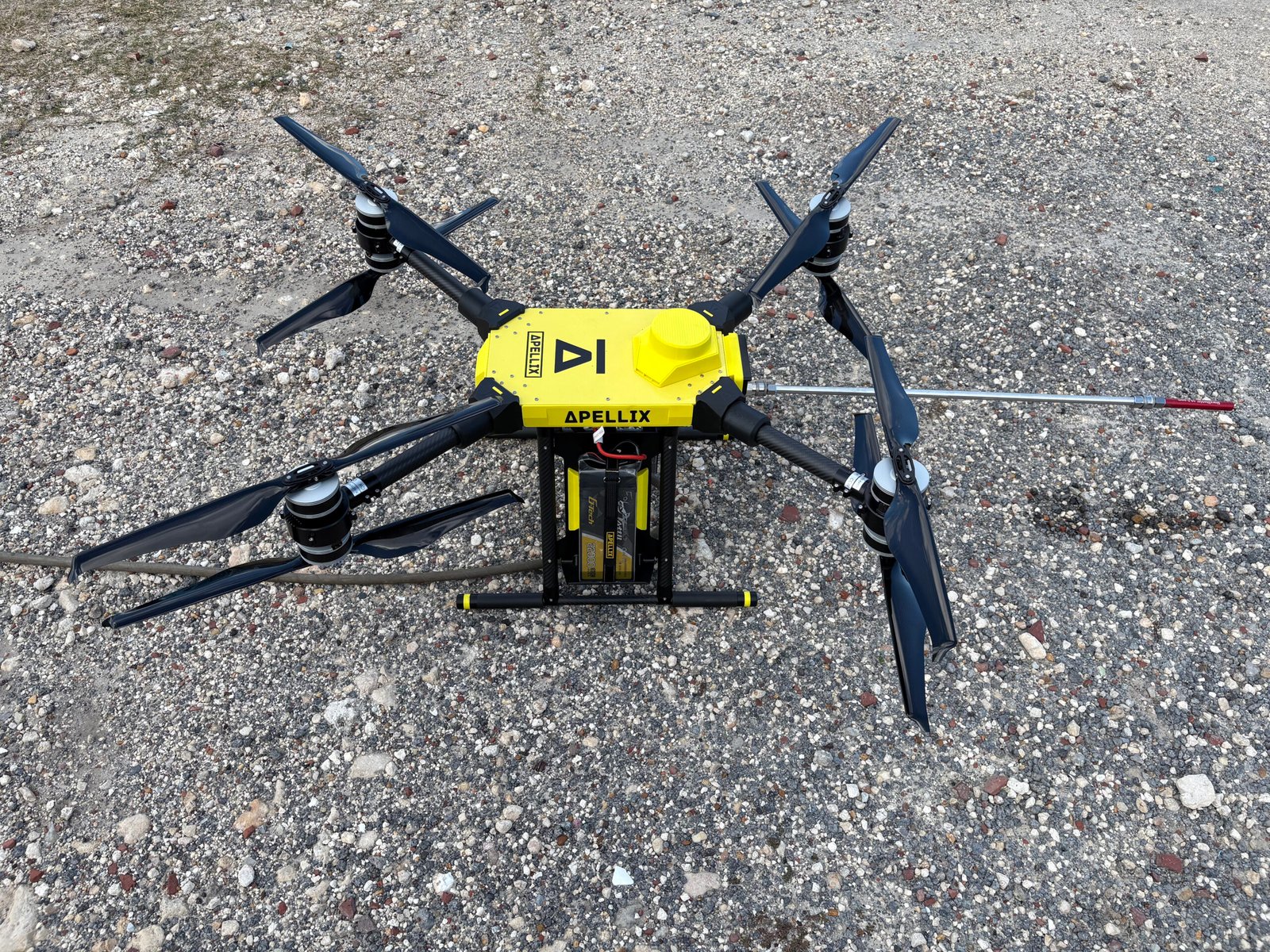
Government facilities demand more than a clean facade. They demand a method that respects security, supply chain rules, and public accountability. A modern answer is an NDAA-compliant cleaning drone. It places a precise wash head at height while the crew remains on the ground, and it does so with hardware and workflows that align with federal and state requirements. The result is a safer, faster, and more transparent way to maintain tall structures without compromise.
What NDAA compliance means in plain language
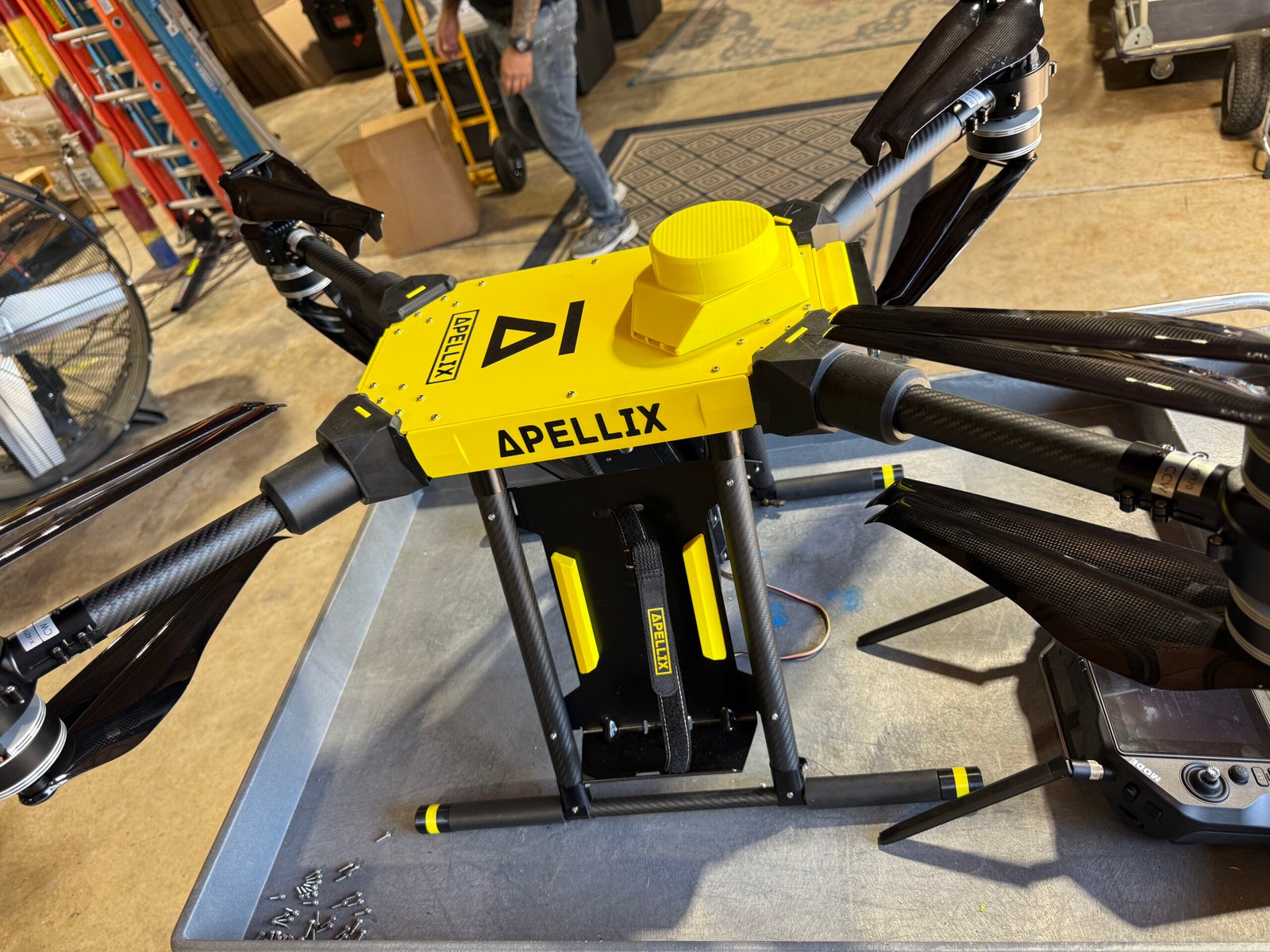
NDAA standards address the parts inside the aircraft and the way data moves during and after a mission. An NDAA-compliant cleaning drone is built from approved components, avoids restricted vendors, and supports secure links and storage. For a facilities team or a contracting officer, that means you can ask straightforward questions and get verifiable answers about radios, cameras, flight controllers, firmware, and data handling. The focus is confidence. When you know what is in the system and where your data goes, you can approve work on sensitive sites with less friction.
Blue UAS and how it fits the picture
Many public buyers consult the Blue UAS ecosystem when evaluating aircraft for sensitive work. While Blue UAS is not the only path to approval, it is a familiar reference point for security-minded operations. The practical takeaway is simple. An NDAA-compliant cleaning drone gives you a clean supply chain story and supports a documented security posture that procurement teams understand.
Where federal and state rules meet the jobsite
Rules are only useful if they can be followed in the field. The right platform supports encrypted command links, secure storage of flight logs, and options for offline workflows when a site requires it. Crews operate under FAA Part 107 and align their checklists with agency safety plans. That alignment is what turns a paper rule into a smooth workday on a real asset.
Why agencies are adopting drone-based cleaning
Agencies manage water towers, administration buildings, correctional facilities, transit structures, and stadiums. These assets are tall, public-facing, and essential. An NDAA-compliant cleaning drone keeps crews on the ground, reduces disruption to neighbors, and delivers repeatable quality on complex geometry. The method is easier to schedule, easier to safeguard, and easier to document.
Safety without tradeoffs
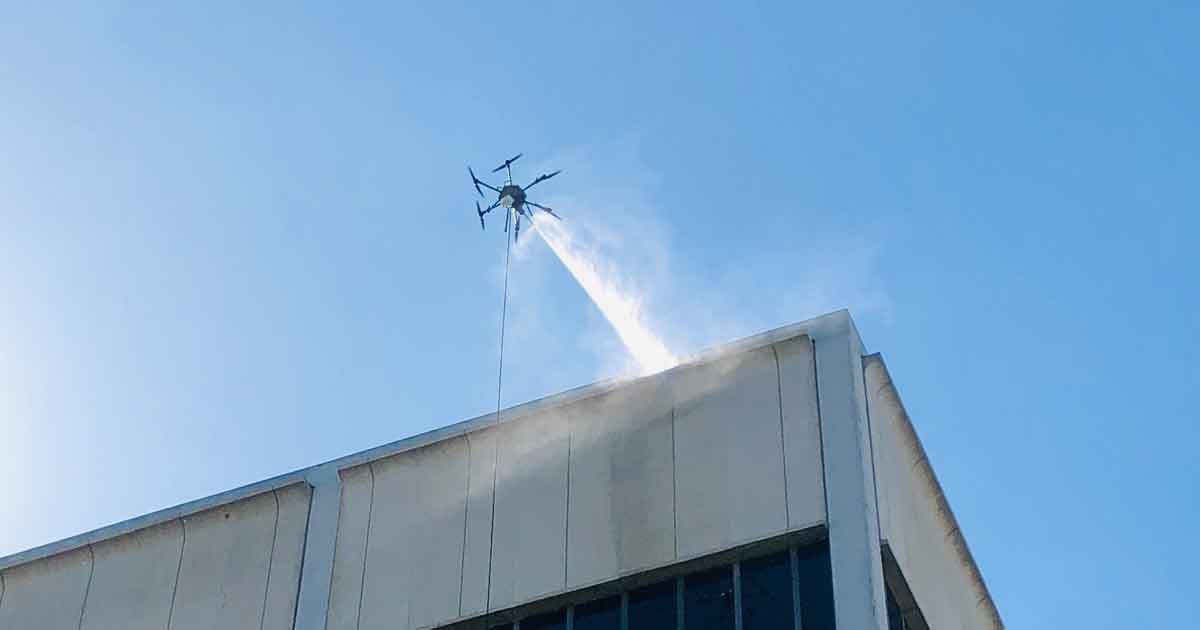
Falls from height and overhead hazards are the risks that haunt every tall task. When the nozzle rides on a drone, the pilot and wash lead work from a safe zone on the ground. Spotters protect walkways and entries. The exposure window shrinks to near zero for most of the surface. The best part is that safety and speed improve together. You are not trading one for the other.
Scheduling that respects public operations
A courthouse, school campus, or district office must remain open and calm. The footprint for an NDAA-compliant cleaning drone is compact. Barricades are tighter, sidewalk closures are shorter, and sections can be completed during off-peak windows. The work reads as quiet and organized rather than disruptive.
The compliance story you can hand to procurement
Contracting officers want specifics, not buzzwords. Below is the type of clarity that an NDAA-compliant cleaning drone program provides and that your team can place directly into a scope or justification memo.
Hardware provenance and documentation
The vendor should provide a bill of materials that identifies radios, computers, sensors, and the flight controller. Restricted vendors are excluded. Firmware is signed and version-controlled. Spare parts follow the same rules as the base aircraft. This is the foundation of the compliance story, and it must be available on request.
Command links and data at rest
Control links use modern encryption and resist casual interception. Telemetry and media are stored locally during the mission and can remain on agency-controlled devices after the job. If cloud tools are used, storage regions and retention periods are disclosed in writing. The key is choice. Agencies pick where their data lives and how long it remains there.
Network posture on sensitive sites
Some facilities require no external network connections during operations. An NDAA-compliant cleaning drone can run without a live cloud link. Mission plans, logs, and media can be transferred to agency storage after the flight. This offline option is often the difference between a fast approval and a long delay.
Pilot credentials and accountability
Professional pilots hold Part one zero seven certificates and bring current training records. The operations manual spells out preflight, lost link, and abort procedures. Insurance and incident reporting paths are clear. When the process is written, repeatable, and auditable, everyone from safety officers to finance reviewers can sign off with confidence.
How the cleaning actually happens
Compliance is the gate. Performance is the reason you are there. The workflow below shows how an NDAA-compliant cleaning drone delivers consistent results on real structures.
The ground rig and the aerial positioner
Water and approved chemistry come from a ground-mounted skid. A hose routes that supply to the aircraft, where a rugged mount holds the nozzle. The pilot keeps a steady standoff and a clean angle. The wash lead manages dilution, pressure, and flow from the rig. This division of attention is what creates uniform passes and controlled dwell times.
Proof of pass and standard of care
Before production begins, the team performs a short proof pass that shows the planned settings on a small area of the actual surface. The owner rep evaluates the look in both shade and sun. When both sides agree, the team locks those settings and replicates them across the elevation. This is the moment that replaces guesswork with a standard.
Production rhythm and quality checks
The pilot paints long bands with consistent overlap. Corners and returns receive a second pass to keep edges clean without overspray. The wash lead counts dwell, so the pace is audible to the crew. At logical breaks, the team inspects the result, addresses any faint marks, and documents what worked. The goal is easy days that add up to predictable schedules.
Use cases across government portfolios.
A single region can include everything from a rural tank to an urban transit hub. The method adapts to each task without losing its discipline.
Water towers and elevated tanks
Curved shells and tall risers favor a steady standoff and even rinse. A drone-based approach clears organic films and soot while respecting the coating. Neighborhoods see a professional process with minimal disruption.
Administrative and justice buildings
Public buildings must remain open and dignified. The drone keeps crew and equipment out of entries and plazas for most of the day. Courthouse steps stay accessible, glass stays safe from overpressure, and the facade reads as clean without streaks.
Transit and stadium structures
Large spans, repeating patterns, and complex geometry make these projects perfect for a drone. The pilot can trace ribs and panels while the wash lead adapts pace for sun and shade. Work windows can be set to respect events and commuter flows.
Security is not only about parts.
An NDAA-compliant cleaning drone is necessary, and a secure operating culture is just as important. The best programs build both.
Clear roles and communications
Pilots, wash leads, and spotters use simple calls for start, pause, dwell, and rinse. Radios are checked during the briefing. Everyone knows what to do if the wind rises or a member of the public crosses a barricade. This calm style shows up in better work.
Environmental care and public stewardship
Runoff is contained and directed to approved drains. Landscaping is protected with covers and light fencing. Informational signs explain who is working and how to contact the site supervisor. Government work happens in public view, so courtesy matters.
Transparent reporting
After the job, the agency receives a short report with dates, weather, crew names, surfaces treated, chemistry recipes, and a summary of any changes made to the plan. Media is delivered in the format the agency prefers and stored where they dictate. This clarity closes the loop for stakeholders.
How to specify the work so you get what you want
Good specifications save time. Here is language your team can adapt.
Write the outcome, not just the tool.
Describe the visual standard for clean surfaces, the acceptable range of pressure, and the protections required for coatings and adjacent elements. Request a proof pass to lock the standard before production.
Require a simple compliance packet.
Ask bidders to include a one-page supply chain statement, a short description of command link security, a data storage plan, pilot credentials, and a sample of the post-project report. Keep the request short and precise so the answers are useful.
Ask for offline options.
If your facility limits network connections, require an offline mission capability. State where logs and media will be handed over, and who will hold them.
Frequently asked questions
Is NDAA the same as Blue UAS
They are related but not identical. NDAA compliance addresses restricted sources and security expectations. Blue UAS is a widely referenced program that evaluates aircraft for defense use. Many buyers use both as guideposts. What you want is a clear supply chain and a security posture you can verify.
Can this method damage coatings
Settings are selected to respect the coating while removing soils. Controlled dwell and measured rinse protect the finish. The proof pass confirms the plan on the actual surface before production begins.
Do we still need lifts for detail work?
Often, the drone completes the majority of the surface. If architectural features demand close attention, a short lift session may follow for the final touch. The heavy coverage and the risky height work are handled by the drone.
How are pedestrians and neighbors protected?
Barricades, spotters, and thoughtful flight paths keep the public safe and comfortable. The pilot adjusts the approach when the wind shifts. Work windows avoid peak foot traffic whenever possible.
The takeaway
Public assets deserve a method that is safe, efficient, and secure. An NDAA-compliant cleaning drone delivers that balance. It aligns with procurement expectations, protects data, and turns tall work into a predictable routine. For agencies and contractors who want clean structures and clean paperwork, this approach is the practical way forward.