Water towers are essential public assets that demand careful maintenance. Their height, curvature, and coatings create real challenges for crews who need stable access and repeatable results. Traditional methods rely on lifts, scaffolds, or rope teams. These approaches can work, yet they add time, cost, and risk. A modern answer is the water tower cleaning drone. It positions a precise spray head at altitude while the crew remains on the ground, bringing control and consistency to a task that used to hinge on access equipment and perfect weather.
Why water towers are different
Water towers look simple from a distance. Up close, they present a mix of shapes, coatings, and access restrictions. A smooth spherical or torus section sheds rinse water in unpredictable paths. Vertical columns create shadow lines where organic films hide. Coating systems must be protected during cleaning so that service life is preserved. A water tower cleaning drone turns these variables into a controlled process. The pilot manages the standoff and angle. The wash lead controls flow, chemistry, and timing. Together, they deliver a steady pattern that respects the coating and clears soils across complex geometry.
Geometry changes everything
Curved shells demand an even approach. If the spray angle wanders, you get light and dark bands that show at sunset. The drone allows the nozzle to stay normal to the surface as it moves, which keeps the impact uniform. This matters in large bowls and domes where a small drift in angle spreads into visible arcs over many square feet. The steady geometry that a water tower cleaning drone holds is the quiet reason the finish looks consistent when the job is complete.
Coatings deserve respect
Exterior coatings on tanks protect against corrosion and weather. They are tough yet deserve gentle handling. Cleaning should remove organic growth and road film without eroding the surface. Drone-based work favors controlled dwell and measured rinse rather than brute force. That balance protects the system that protects the steel.
How a water tower cleaning drone works
At heart, the process is familiar to any industrial washing crew. The difference is where the nozzle goes and how precisely it stays there. The fluid circuit lives on the ground. The application lives at height.
The ground rig and fluid path
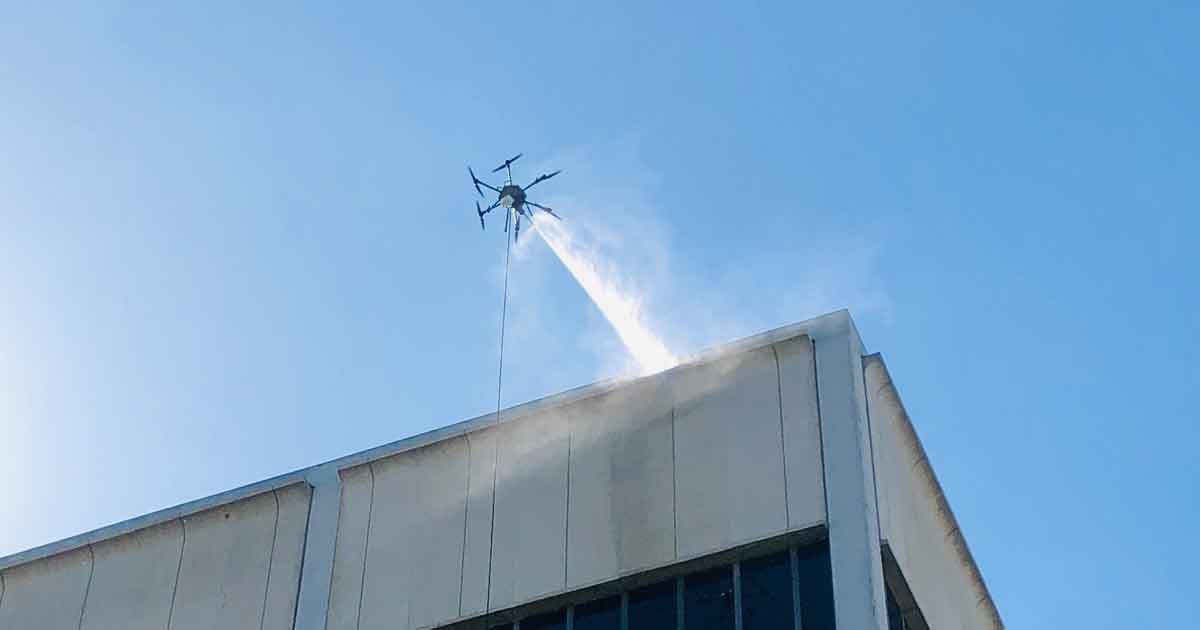
Water and chemistry are supplied by a standard industrial skid on the ground. A hose routes that supply to the drone. The wash lead sets dilution, pressure, and flow. Because the supply remains on the ground, the drone does not carry heavy liquid. That simple fact enables long, uninterrupted passes across large surfaces.
The aerial positioner
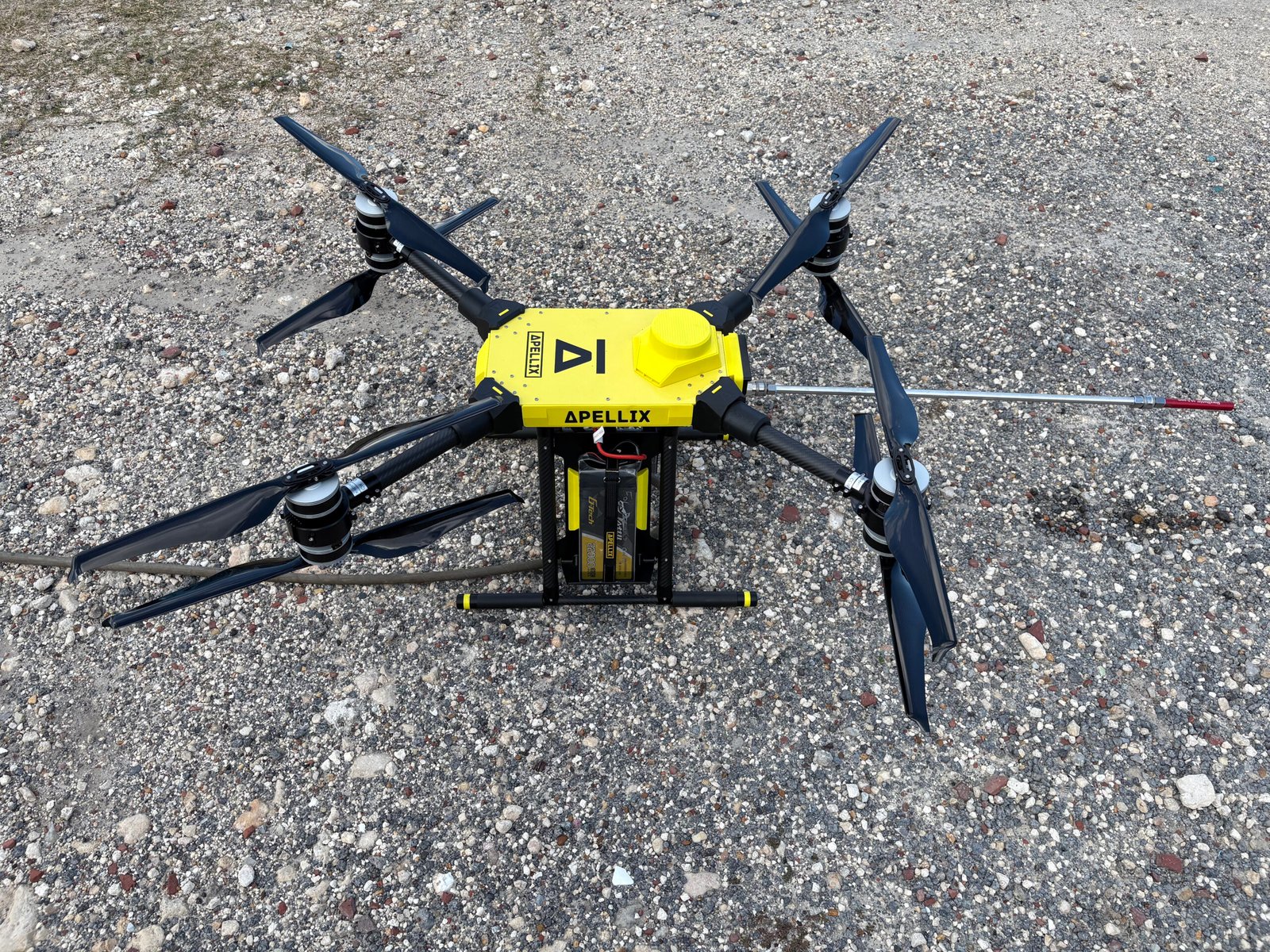
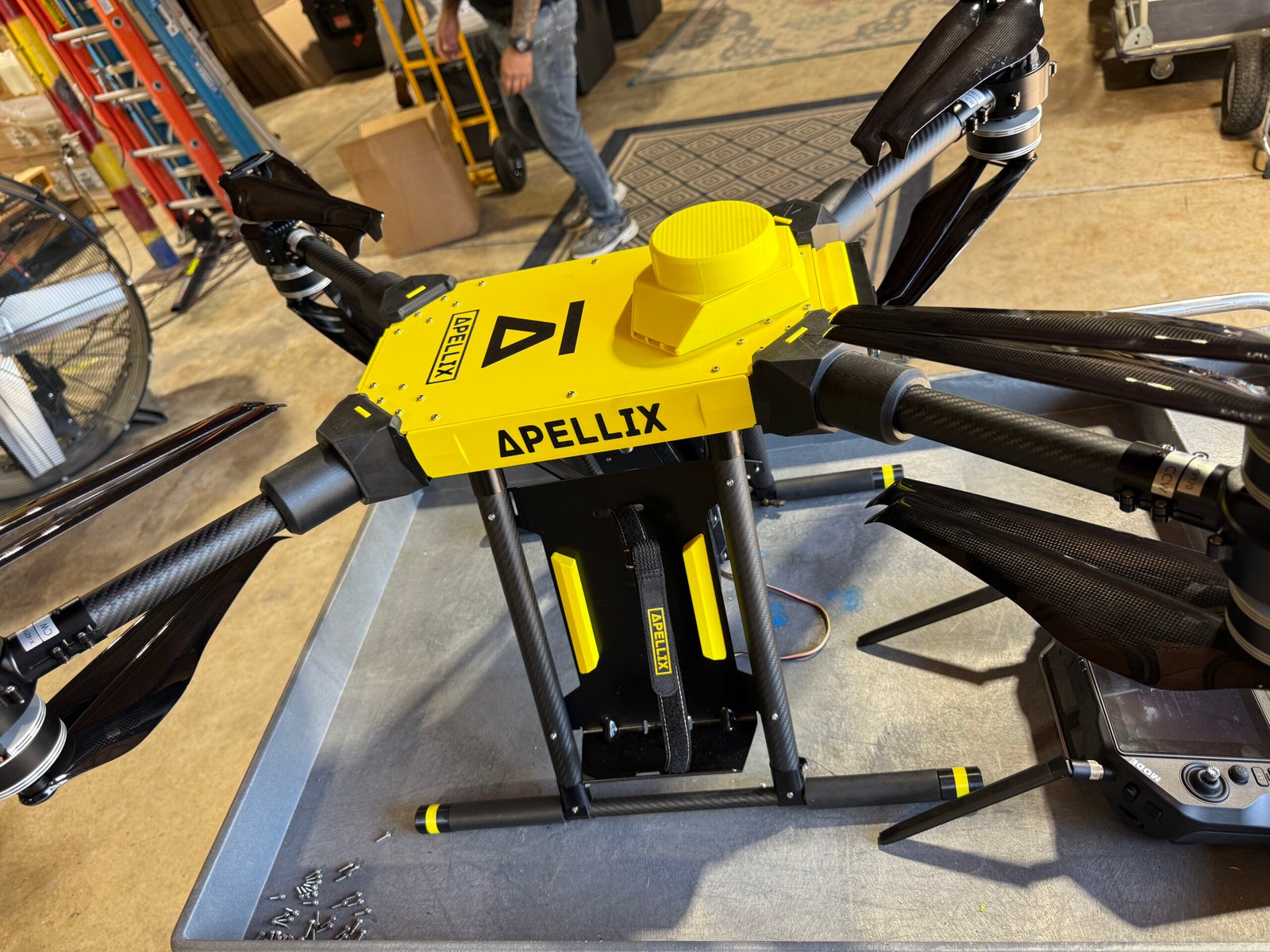
The drone acts as a flying positioner for the wash head. The pilot keeps a constant standoff and a steady angle. When wind shifts, the pilot adjusts the approach to guard against overspray and protect nearby areas. The water tower cleaning drone gives the crew control over the last few feet of the process, where quality is decided.
Roles that keep quality high
The pilot focuses on flight path, distance, and sight lines. The wash lead focuses on dilution, dwell, and rinse. Spotters watch public paths and coordinate brief pauses when needed. This division of attention creates repeatable passes and makes the outcome predictable.
Safety and compliance advantages
Every discussion about elevated assets begins with safety. A water tower cleaning drone keeps people on the ground for most of the operation. That single change reduces exposure to falls, awkward transfers, and overhead hazards.
Removing exposure at height
Aerial lifts, swing stages, and rope access each create exposure that must be managed. By placing the nozzle at altitude while the team stands in a safe zone, the job removes many of those risks. When a lift is still needed for localized detail, the window of exposure is far shorter.
A calmer work zone
Water towers often sit near schools, neighborhoods, or plant roads. Drone-based cleaning has a smaller footprint than large lift setups. Barricades are tighter. Sidewalks and lanes can remain open more of the day. The site feels organized and calm, which helps everyone involved.
Training that fits professional crews
Professional pilots and wash leads train on the platform and practice the communications that keep the process smooth. Site protocols are followed with the same discipline used for cranes or lifts. The drone is introduced as a serious tool that integrates with existing safety systems, not as a gadget.
A field-tested workflow
Owners and city managers want to know exactly how the day will run. A clear workflow builds trust and sets expectations. The steps below reflect a practical plan that our crews follow for tank work.
Site walk and plan
The team surveys the tank and its surroundings. Drainage paths, air intakes, electrical cabinets, and no-spray zones are marked. The crew selects chemistry for the soils observed and confirms the safe range for the coating system. The pilot and wash lead establish simple calls for start, pause, dwell, and rinse so that no instruction is missed in rotor noise.
Set up and proof pass.
Barricades define the work area and spotter stations. Hose routing is secured to avoid snags and trip points. The pilot lifts for a short proof pass to confirm standoff, angle, and overlap. The wash leads the dwell, checks bead formation, and inspects the rinse. When the test panel meets the standard, the team moves into production.
Production rhythm
The water tower cleaning drone traces long bands around the bowl with consistent overlap. On the column and risers, the pilot works vertical patterns that prevent water from stacking into heavy runs. The wash lead adjusts pace for shaded areas where dwell needs a touch longer. If wind arrives, the pilot changes the approach to hold quality and protect the neighborhood. Listening to the calls, the entire crew moves together in an easy rhythm.
Quality control and wrap
At logical breaks, the team inspects the work in shade and direct sun. Any faint halos or missed edges are addressed before moving the barricades. The rig is rinsed, the site is cleared, and a brief report documents the settings that delivered the best result. Next time, production begins at full stride.
Protecting coatings while lifting appearance
Cleaning should not be a stress test for paint. It should be a service that extends life and keeps the tower presentable for the community it serves. The approach with a water tower cleaning drone favors controlled chemistry and measured impact. This approach clears organic films, soot, and light residues while respecting the bond and thickness of the coating.
Dwell time done right.
Dwell is where chemistry loosens the bond. Too little and soils resist the rinse. Too much and residues can redeposit. With the drone holding a steady standoff, the wash lead counts dwell so that each panel receives the same attention. The result is a uniform look with fewer repeat passes.
Rinse that actually removes soil.
Flow is what carries soil away. The rinse follows the application path so that loosened material travels down and off rather than sideways into a clean zone. Curved shells get a final cleansing sweep that prevents faint tails where water gathered. The eye reads this as a smooth, even sheen across the entire structure.
Environmental and community care
Work on public assets requires respect for neighbors and surroundings. Drone-based cleaning makes that respect easier to deliver.
Overspray control
With precise standoff and angle, the spray cone remains compact. The pilot shifts approach at a moment when the wind changes. This keeps the work on the tower and not on parked cars or nearby windows. Spotters confirm conditions along sidewalks and call brief pauses when pedestrians approach.
Runoff management
Covers and temporary channels protect sensitive ground. The team keeps drains clear and monitors water movement so that residues do not settle where they do not belong. Good housekeeping is part of the craft, and it is visible to anyone who walks by.
Quietly professional
Compared to large access equipment moving around a site, the drone keeps the soundtrack simple. The work continues without constant repositioning of platforms. Neighbors see a clean process rather than a chaotic one.
Cost and schedule benefits
Owners focus on calendars and budgets because those are the levers they can pull. The water tower cleaning drone supports both without trading away quality.
Fewer access delays
Lift availability, site approach, and setup time can stretch a schedule. When a drone handles the main field of the tower, many of those delays disappear. The work starts earlier in the day and moves farther before lunch. If a lift is needed for small details, it is used for a fraction of the total hours.
Predictable daily output
Steady standoff and controlled overlap make output more predictable. The crew can commit to a band of coverage each day and achieve it. Owners appreciate a plan they can explain to their stakeholders with confidence.
Less rework and fewer surprises
Even coverage and a measured rinse reduce streaks and halos that demand a second visit. When the method builds quality into each pass, the budget stops bleeding hidden hours.
Practical tips for specifiers and owners
People who approve the work want simple guidance they can act on. The ideas below help set a project up for success.
Write the result you want
Describe the visual standard in plain language and agree on a small test area on day one. When both sides sign off on that standard, production becomes simple.
Ask for the workflow, not just the machine.
The tool is only part of the story. Ask the contractor to describe their site walk, proof pass, production pattern, and wrap. The best teams answer in clear steps, not vague promises.
Confirm training and communication.
Professional pilots and wash leads have practiced together. They can explain their calls and how spotters protect the public. That clarity shows up later as a smooth day on site.
Frequently asked questions
Can a drone clean the entire tower
In many cases, the drone completes the majority of the surface. If architectural details or tight areas require close attention, a brief lift session may follow for final detail. The heavy lifting of coverage comes from the water tower cleaning drone.
What about windy conditions
Light wind is manageable through approach and angle changes. If gusts exceed safe limits, the crew pauses. The standard never bends to the weather. Quality and safety stay first.
Will coatings be damaged?
The method emphasizes controlled dwell and measured rinse. Settings are selected to respect the coating system while removing soils. The result is a clean surface and a preserved finish.
How do you protect the community during the work?
Barricades, spotters, and thoughtful flight paths keep the public safe and comfortable. Overspray is minimized by precise standoff and quick adjustments when wind shifts. Runoff is managed so that residues do not settle where they should not.
The takeaway
A water tower cleaning drone brings modern control to a classic maintenance task. It places the nozzle at altitude with precision, keeps crews safe on the ground, and turns complex geometry into a predictable workflow. Owners see reliable schedules and consistent results. Communities see a clean landmark and a professional process. When your calendar calls for elevated tank washing, choose the method that respects coatings, budgets, and people in equal measure.